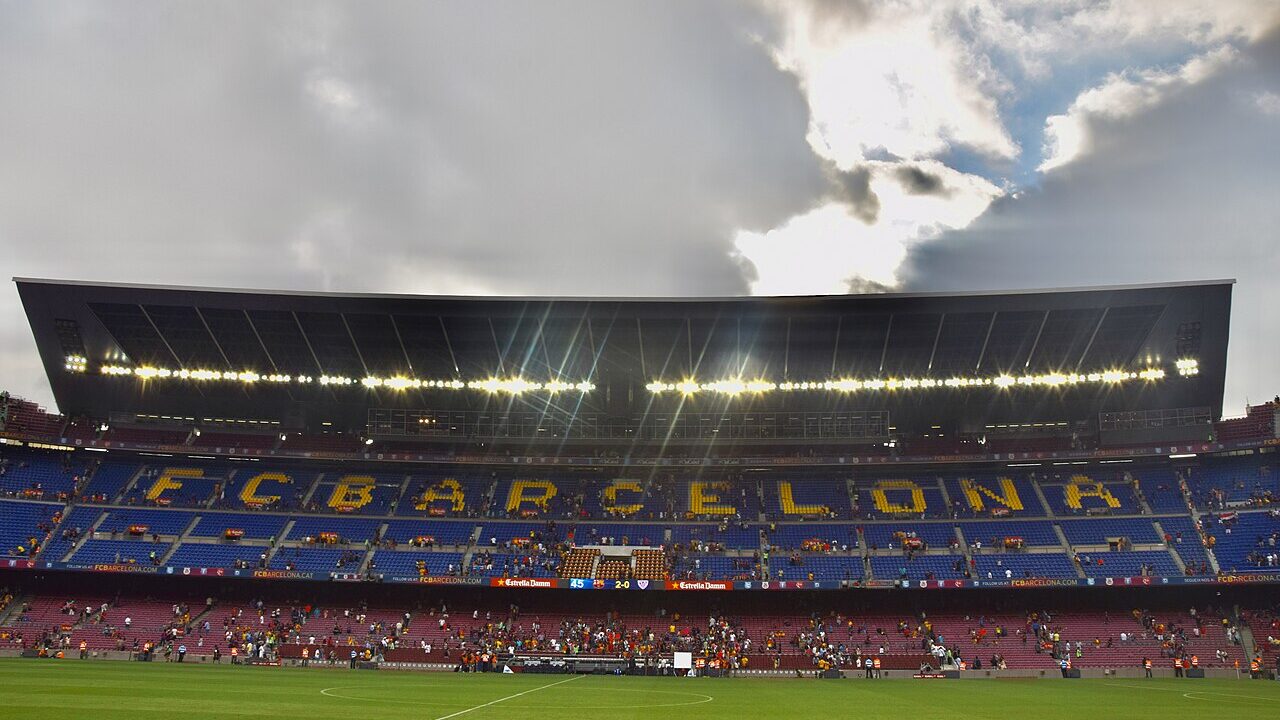
I first walked into the old Camp Nou in 1997. I was twenty-three, visiting Barcelona for the first time, standing in the away end during a low-stakes league match against Deportivo La Coruña. What I remember most is the noise — not the roar of a goal or the surge of a crowd, but the ambient sound of 90,000 people breathing. That specific density of humanity in one space, the sense that the world had contracted to these dimensions and that nothing outside the white lines mattered. I have been to many stadiums in the thirty years since. I have never felt quite that same compression of attention.
The new Camp Nou will be different. It will be larger — capacity rising to 105,000 — and technologically superior, and structurally sound in ways that the ageing original was increasingly not. Whether it will feel the same is a question that cannot be answered until the first full crowd experiences it. But having spent a morning recently being walked through the renovation project by members of the Espai Barça team, I can tell you what is being built, and why it matters for a club trying to position itself for the next half-century.
The Scale of What’s Happening
The Espai Barça project is not merely a stadium renovation. It is the transformation of a 55,000 square-metre urban site in the Les Corts district of Barcelona into what the club describes as a “sports and entertainment hub” — a complex that will include the renovated Camp Nou, a new Palau Blaugrana arena for basketball and futsal, a new ice rink, commercial spaces, a sports science facility, and significant public green space.
The total investment is projected at approximately €1.5 billion. This is being financed through a combination of the Spotify naming rights deal (reported to be worth €280m over five years), the previous economic lever revenue, and long-term commercial lending. The financing structure has been criticised by some financial analysts as aggressive given the club’s existing debt position, and the criticism is not entirely unfair. But the alternative — leaving a 70-year-old stadium to continue deteriorating while rival clubs build new venues — is the kind of passive decline that kills clubs over decades rather than years.
What the New Stadium Will Feel Like
From the architectural renderings and from the physical progress visible during my visit, several things are immediately apparent about the new Camp Nou. The most striking is the roof — a tensile structure covering all 105,000 seats that will, for the first time in the stadium’s history, make playing there on a December evening a comprehensively different experience from playing on a blazing July afternoon. The roof creates acoustic possibilities that the open Camp Nou never had. The noise will be contained, amplified, reflected back onto the pitch in ways that players and managers who have visited during the construction process have described as, depending on their team affiliation, exciting or terrifying.
The seating bowl has been redesigned to bring fans significantly closer to the pitch. The original Camp Nou, despite its capacity, always felt somewhat distant — a consequence of 1950s engineering priorities that prioritised sightlines from high up rather than proximity at the front. The new design prioritises the lower tiers in particular, bringing the front rows within roughly eleven metres of the touchline. For comparison, the old Wembley’s nearest seats were at the same distance. The Allianz Arena in Munich — frequently cited as the gold standard in modern stadium atmosphere — has its front rows at approximately nine metres.
“The new Camp Nou is not just a bigger stadium. It is an attempt to reimagine what it means to watch football in Barcelona — and to compete financially with the Premier League’s commercial machine.”
The Commercial Logic
None of this is solely about the fan experience, and it would be naive to pretend otherwise. The new Camp Nou is, at its core, a revenue-generation facility. The old stadium, despite its capacity, was commercially primitive by modern standards — limited premium seating, inadequate hospitality areas, food and beverage infrastructure that had barely changed since the 1980s. The new facility will have approximately 5,000 premium hospitality seats, multiple sky lounges, a museum redesign, and retail space that the club believes will generate significantly more revenue per match day than the previous iteration.
The projection — and projections of this kind should always be treated with appropriate scepticism — is that matchday revenue will approximately double once the stadium is operating at full capacity. Given that Real Madrid’s Santiago Bernabéu renovation has, by all accounts, delivered close to its promised commercial uplift, there is evidence that this is achievable. Real Madrid reportedly generated over €180m in matchday revenue last season, against Barcelona’s approximately €90m from a partially operational Camp Nou. The gap tells you everything about why this renovation was necessary.
Completion Timeline
The current projected completion date for the full Espai Barça complex is 2028 — though the main stadium bowl is expected to be fully operational for the 2026-27 season opener. This timeline has slipped twice already: the original plan envisaged completion in 2025. The delays are attributable to a combination of supply chain disruptions, planning revisions, and the general unpredictability of large-scale urban construction in a dense residential neighbourhood.
The 2026-27 reopening, if it holds, will be significant. It will coincide with what looks set to be one of the strongest Barcelona squads in a decade, with Yamal, Pedri, Cubarsí, Balde, and Fermín López all entering their collective prime. The alignment of sporting quality and commercial infrastructure — if the timing works — could produce a compounding effect that accelerates the club’s recovery and positioning in a way that even the most optimistic projections have struggled to fully quantify.
I will be there for the opening match. I was there in 1997, feeling 90,000 people breathe. I want to feel 105,000.
