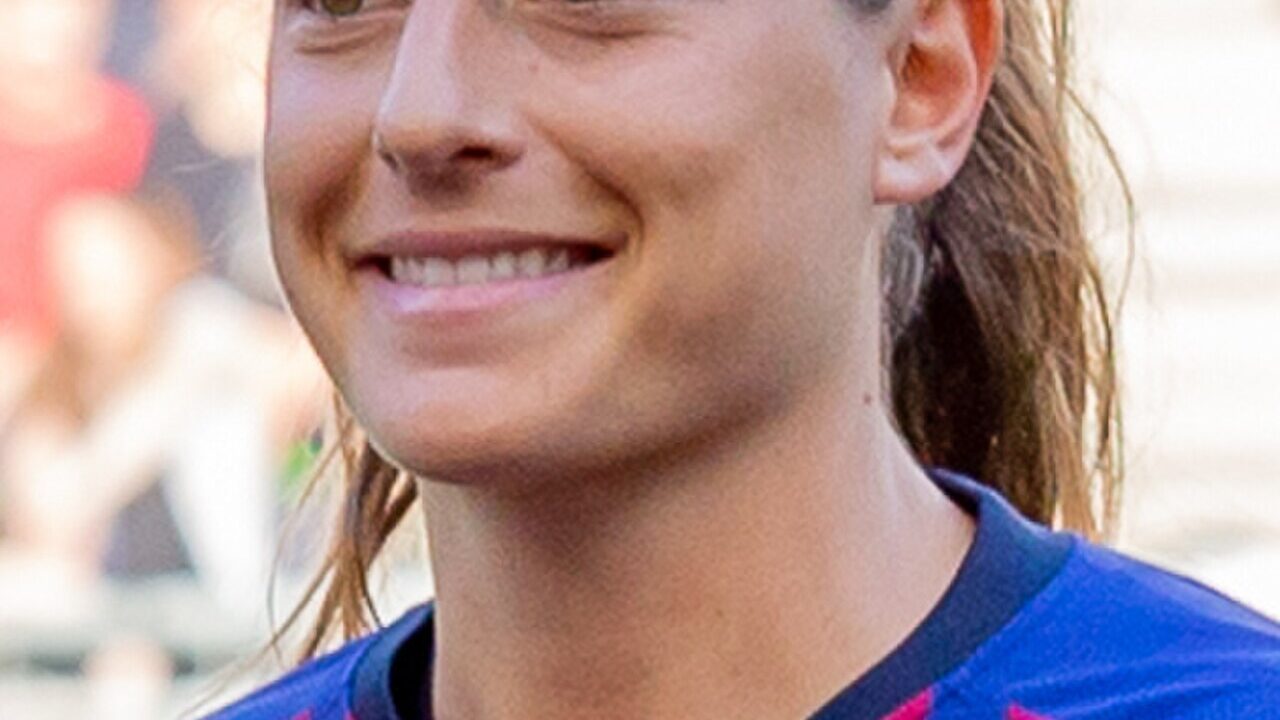
We meet in a training facility cafeteria in Barcelona’s Les Corts district, and the first thing you notice about Alexia Putellas is how still she is. Not withdrawn, not cold — just still. In an era of footballers who perform their personalities for every available camera, who manage their public image with the precision of a political campaign, Putellas sits across a small table and looks at you with dark, direct eyes and gives the impression that she is genuinely considering each question before she answers it. In thirty years of sports journalism, I have met perhaps eight or nine athletes with this quality. It does not guarantee greatness. But in my experience, it rarely exists without it.
She has just come from a technical session — this is her preparation period before the next Liga F season, which begins in September. She is thirty-two years old, has two Ballon d’Or awards on a shelf somewhere, and has spent the past three years quietly dismantling the narrative that the ACL injury she suffered in July 2022 — on the eve of her peak, at the beginning of Spain’s most important international cycle — had permanently diminished her. The narrative was wrong. She is making sure everyone knows it.
On the Injury and the Return
I ask her to take me back to the moment she knew something was wrong. The 2022 training session, two days before Spain were due to play the Netherlands in the opening group match of the Euros. She had been running a routine change of direction drill. There was a sound, she says. A sound that people who have been through an ACL rupture describe with horrible specificity.
“I knew immediately,” she says. “Not because of the pain — the pain came later. Because of the sound and the feeling. It is very specific. You know.” She pauses. “The first thought was not about football. The first thought was just: this is going to be a long time.”
It was eleven months of rehabilitation. She describes the process with the kind of systematic, almost clinical precision that you hear from athletes who have turned injury recovery into a performance in its own right — who have understood that the mental discipline required to do the same physiotherapy exercise for the three hundredth consecutive day without losing focus is a form of athletic training as demanding as anything done on a pitch.
“The hardest part was not the physical side,” she says. “My body recovered well. The hard part was the identity question. When you cannot play, who are you? I had been a footballer since I was eight years old. Football is not what I do — it is what I am. And suddenly I could not do it. So what was I?”
She found the answer, she says, in a process of deliberate reconstruction — not of her physical capacities, but of her understanding of what made her good. She watched hours of footage of her own play, going back to her early seasons at Barcelona. She worked with a sports psychologist on understanding what she describes as “the automatic decisions — the ones your body makes before your brain has finished the sentence.” She came to believe that the unconscious decision-making that separates elite from very good was not destroyed by the injury but had simply been overridden by anxiety, by the pressure to return, by the gap between expectation and actual capacity.
On the Return to Form
“When I came back, the first six months were very frustrating. People were kind about it publicly, but inside the squad, inside training, you know when you are not yourself. I was playing but I was not playing — I was managing myself, protecting myself, making the cautious choice every time. That is not who I am. That is not how I play.”
“I had to learn to be the best version of myself again, not the version people remembered. The version people remembered was already gone. I had to become someone new who could also be very good.”
The turning point, she says, was a Champions League tie in early 2024 against Lyon — traditionally the gold standard opponent for measuring where a women’s team is in its development. Barcelona led 2-1 from the first leg. Lyon were better in the return. With twenty minutes remaining, Barça were 1-0 down on the night, level on aggregate. Putellas received the ball on the left of midfield, turned inside two defenders with a movement so quick and so certain that it looked entirely unrehearsed, drove into the box, and squared for Salma Paralluelo to score the goal that put Barça through.
“That moment,” she says. “I felt it in that moment. I was not thinking about my knee. I was not thinking about the recovery. I was just playing.” She smiles, and it is a different kind of smile than the composed, careful expression she has been wearing. This one is involuntary. “That is the only way I know how to play.”
On the Women’s Game
The conversation shifts to the broader landscape. Women’s football has changed dramatically in the years of Putellas’s career — she has seen it go from something played in near-empty stadiums for minimal media attention to a commercial and cultural phenomenon that is still, she argues, substantially undervalued relative to its audience and its product quality.
“The Camp Nou record,” she says, referring to the 91,553 attendance for a 2022 Champions League quarter-final between Barcelona Femení and Real Madrid — which was at the time the highest attendance in the history of women’s club football — “that was a statement. That was people saying: we want this. We are here. Give us more.” She is measured, not angry. “The game is growing. The investment is growing. But if you compare where it should be — given the size of the audience, given the quality of the football — there is still a long way to go.”
On What’s Next
At thirty-two, Putellas is in the phase of her career where the questions about legacy begin to overtake the questions about the next match. She does not seem comfortable with this framing. When I ask about legacy, she redirects with what seems like genuine rather than performative modesty.
“I do not want to talk about what I have done. I want to talk about what the team is going to do. Salma, Patri, the younger players coming through — they are the conversation. I want to win another Champions League. I want to win another Liga F. I want to play in another World Cup, if the body is willing.” A pause. “The body is willing.”
She stands to leave, polite but definitive — the session is over, there is work to do. Standing, she is not particularly tall, not particularly imposing. And yet the stillness I noticed when she sat down is still there. It is the kind of stillness that belongs to people who are absolutely certain of where they are and what they are going to do next. She is thirty-two, has two Ballon d’Or trophies, and has just come back from an injury that ended lesser careers.
The conversation about what she has done can wait. She clearly agrees.
