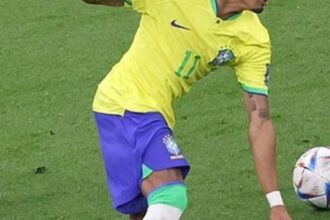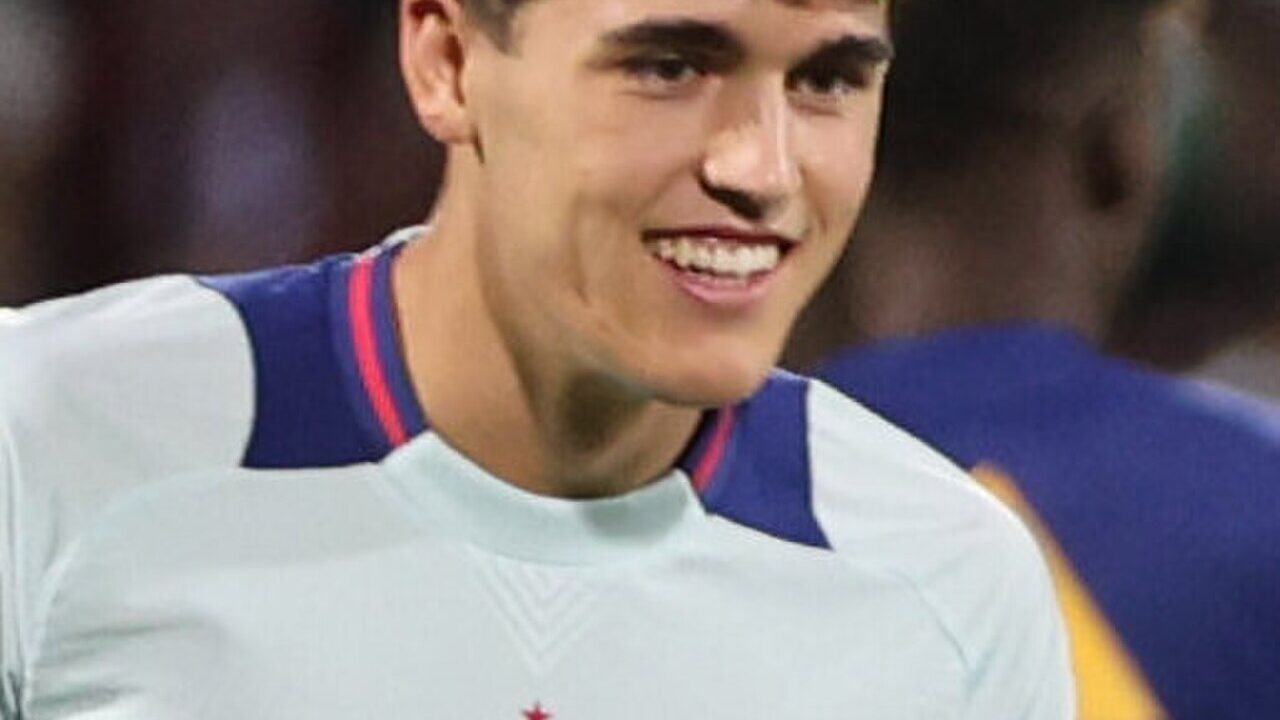
Pep Guardiola used to say that the greatest compliment you could pay a Barcelona player was that the team looked different when he was not in it. It was his way of saying that the truly special ones do not merely play well — they change the geometry of the game around them. They create space for others, pull defensive shapes out of alignment, and make everything look slightly more possible.
I thought about that quote during Spain’s group stage match against Japan. It was a tight, uncomfortable game — the kind of match where international tournaments reveal themselves to be far more brutal than club football. Japan pressed with relentless organisation, their 4-2-3-1 collapsing into a compact 4-4-2 out of possession, and for the first twenty-five minutes, Spain had no answer.
Then Pedri González received the ball thirty-five yards from goal, turned inside two Japanese midfielders with a touch so soft it looked accidental, slid a diagonal into the right channel for Yamal, and changed the entire game. Spain won 2-0. But the score flatters neither side. What happened in that twenty-sixth minute was a reminder that the best players solve problems that their coaches cannot plan for.
Pedri at 23: The Complete Article
I have been watching Pedro González López — Pedri, as the world knows him — since his first full season at Barcelona in 2021-22. I remember writing at the time that he reminded me of a young Xavi in his movement and a young Iniesta in his composure, but that the comparison was ultimately lazy. Pedri is his own player, with his own specific genius.
What makes Pedri special in 2026 — now 23, fully physically mature, and with five seasons of La Liga football behind him — is the combination of his technical purity and his positional intelligence. He does not play in spaces that exist. He plays in spaces before they exist. His decision-making operates on a time horizon roughly half a second ahead of everyone else on the pitch.
At this World Cup, Pedri has averaged 7.3 completed carries per 90 minutes, 5.1 progressive passes per 90, and has created four clear chances in four matches. He has also been Spain’s most tenacious presser in the middle third — winning 68% of his defensive duels. The idea that Pedri is some delicate technical player who cannot handle the physicality of international football was always wrong; at this tournament, it has been comprehensively demolished.
Cubarsí: The Impossibly Young Anchor
Pau Cubarsí turned 17 in January. Read that sentence again. He is 17 years old and he is starting at centre-back for Spain at a World Cup. When I was 17, I was struggling to make my school’s second team. Cubarsí is playing group-stage matches at the world’s largest sporting event with the composure of a player who has done it a hundred times.
To understand what Cubarsí is, you need to have watched a lot of Barcelona’s La Masia in recent years. The academy has always produced technically gifted players — this is not new. What is new, or at least has been rare historically, is producing defenders of genuine world-class calibre. Carles Puyol was an exception. Víctor Valdés was the best goalkeeper Spain ever had and spent his prime at a club that barely acknowledged his excellence. But Cubarsí feels different again.
His reading of the game is so advanced that he almost never looks hurried. In the opening group match against Germany, in a situation where a lesser centre-back would have committed to a tackle and either won the ball or given away a penalty, Cubarsí simply took one step backwards, shifted his body weight, and guided the attacker away from danger with a lightness of touch that was almost balletic. He won the ball in the end, turned out, and played it to Rodri as if nothing had happened.
“Pau Cubarsí is 17 years old and playing like he has already had a 10-year career. The frightening thing is that this version of him is still miles from what he will eventually become.”
The Barça Connection
It is worth pausing on the fact that Spain’s two most impressive players at this World Cup are products of FC Barcelona. This is not a coincidence, and it is not simply about talent. It is about a football philosophy — the Cruyff-Michels-van Gaal-Guardiola lineage of positional play and technical development — that has now filtered through two or three generations of Spanish football thinking.
Pedri was developed at Las Palmas before coming to Barça at 18, but it is at the Camp Nou that his understanding of the game was systematised and refined. Cubarsí joined La Masia at the age of nine. By the time he made his first-team debut at 16, he already had the positional intelligence of someone who had spent a decade learning to read the game in Barça’s specific way.
When you watch Spain in this tournament, what you are partly watching is the long shadow of Johan Cruyff. That is either a beautiful or an unsettling thought, depending on your aesthetic preferences. I find it beautiful.
What the Quarter-Final Will Tell Us
Spain’s quarter-final against Brazil will be the defining test of both players and of Spain’s tournament. Brazil are aggressive, direct, and explosively physical in a way that Germany and Morocco were not. Rodrygo’s movement and Raphinha’s power will ask different questions of Cubarsí than he has faced so far — questions that will require him to be not just composed but genuinely quick.
For Pedri, the test will be whether he can impose his rhythm on a midfield battle that Brazil’s physical midfielders will try to make as uncomfortable as possible. Casemiro has been surprisingly poor in this tournament, but the platform he provides still allows the likes of Vinicius and Rodrygo to operate without defensive responsibility. Spain will need Pedri to be not just creative but relentlessly available.
I have watched enough of these two players to believe they will both rise to the occasion. Pedri has won nothing with Spain yet — the Euros in 2020 ended with him limping off with a hamstring injury, and the 2022 World Cup was a disaster that nobody connected to that tournament wants to revisit. He is hungry in a way that only the gifted and the thwarted can be. Cubarsí, too young to carry the weight of past failure, simply plays without fear.
Together, they represent the best of what FC Barcelona has given Spanish football. And on Thursday in Dallas, they will either take that gift to its logical conclusion or be reminded, in the most public way possible, that talent alone is never enough.
I cannot wait to find out which one it is.