The thing about Raphinha is that his doubters were never entirely wrong. When FC Barcelona paid Leeds United £55 million for him in the summer of 2022, the arguments against the signing were legitimate. He was 25, had never played in a top-four European league outside England, had spent only two seasons in the Premier League, and the fee seemed steep for a winger of inconsistent output who had managed only six goals in his final season at Elland Road.
His first two seasons at Barça did little to silence those doubts. Moments of brilliance — that hat-trick against Villarreal, the Champions League header at Napoli — were surrounded by stretches of puzzling invisibility. He would miss chances that players of his calibre should score, make decisions that seemed to contradict everything his technical ability suggested he understood about the game, and give interviews that were passionate and committed but somehow always slightly disconnected from what we were watching on the pitch.
Then came the 2025-26 season. And then came this World Cup. And now the story is entirely different.
The Player Who Arrived in North America
Brazil’s first group-stage match at this World Cup was against Croatia, in Los Angeles. Raphinha had been named in the starting eleven, which was contentious in itself — there were those in the Brazilian media who argued that Endrick, the brilliant nineteen-year-old from Real Madrid, deserved his place. Dorival Júnior had faith. Within eleven minutes, that faith was rewarded.
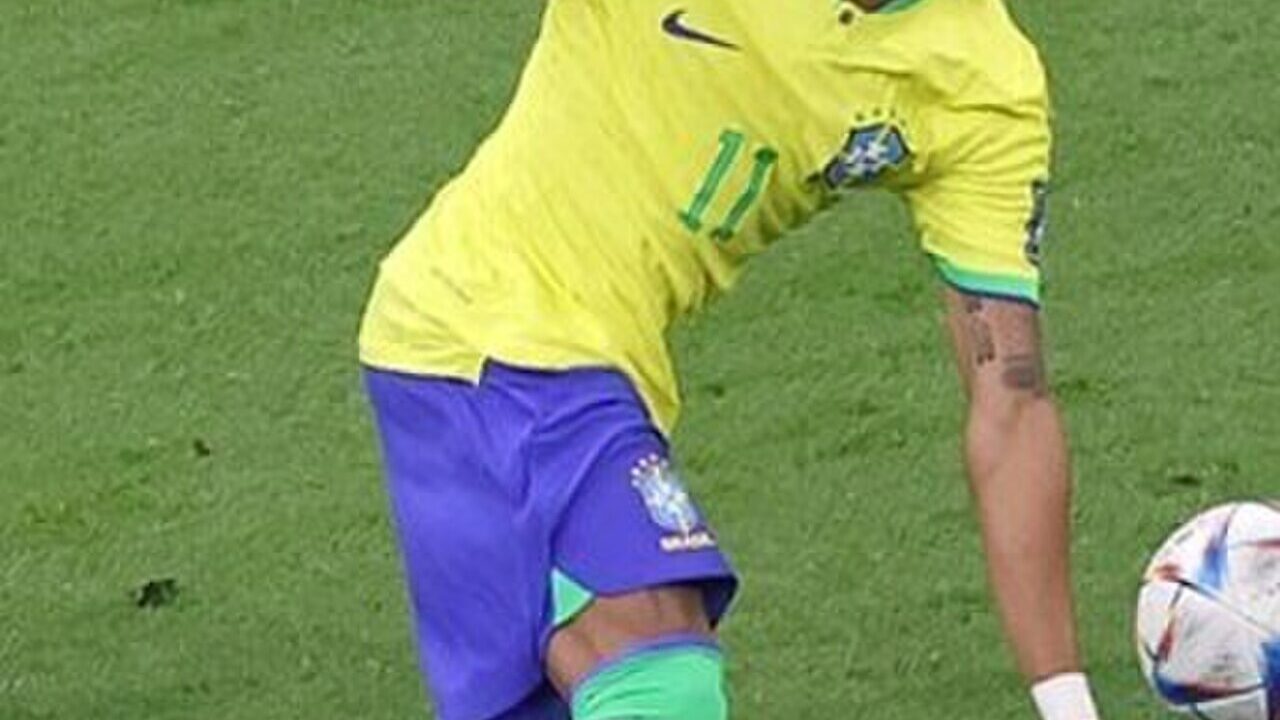
The move started deep in Brazil’s own half — a Casemiro interception, a quick ball to Paquetá, a diagonal switch to the right flank. Raphinha received the ball with his back to goal, spun his marker with a disguised first touch that sent the Croatian left-back sliding, took two touches to advance into space, and then hit a cross-shot so precise that it struck the far post and went in off the keeper’s back. It was the kind of goal that makes you wonder what you have been watching all these years.
Three games later, Raphinha has four goals and three assists. He is the tournament’s leading scorer. He is 29 years old and playing like a man who has waited his whole career for exactly this stage.
What Changed at Barcelona
Speaking to people close to the Barcelona setup, you hear a consistent version of events. When Hansi Flick arrived in the summer of 2024, one of his first acts was to hold individual video sessions with each of his attackers. He showed Raphinha, in forensic detail, the specific movement patterns that would unlock his potential within Barça’s system — and equally specifically, the habits that were costing him goals and assists.
“Flick told him to be more selfish,” one source told me last November. “Raphinha’s instinct is always to try the perfect pass. Flick told him that in the positions he gets into, the shot is often the right choice. It sounds simple. But for a player who has spent years trying to be the creator rather than the finisher, changing that default is not easy.”
The results were immediate. In the 2025-26 La Liga season, Raphinha finished with 22 goals and 14 assists — numbers that would have seemed fantastical eighteen months ago. He was, by the metrics that matter, the best winger in Europe over the course of the season. The Ballon d’Or conversation, which would have been absurd a year earlier, became genuine.
“Raphinha at this World Cup is not the same player who arrived at Barcelona in 2022. He is something better: a player who finally understands what he is and what he can do.”
The Physical and Mental Evolution
Age can do strange things to footballers. For most, the late twenties represent a narrowing — the legs slow, the reaction times dip, the instincts take slightly longer to translate into action. For a select few, the late twenties represent a clarification. The technical and physical qualities have been there all along. What catches up is the mental infrastructure to deploy them consistently.
Raphinha is emphatically in the second category. He is physically as sharp as he has ever been — at 29, he is genuinely quick, not just tricky, and his upper body strength allows him to hold off defenders in wide areas with the kind of assurance that his early Camp Nou years suggested he lacked. But the more significant change is upstairs. He looks, for the first time, like a player who is certain of his own quality.
In an interview with Brazilian television after the Croatia match, he was asked whether he felt vindicated. His answer was interesting: “Vindication implies I was wrong. I was never wrong. I was just not yet what I am now.” It is the kind of statement that could sound arrogant from a lesser player. From Raphinha at this World Cup, it simply sounds like a man who has finally found his truth.
The Bigger Picture for Brazil
Brazil have not won a World Cup since 2002. That is a long time for a country that defines itself through football — through samba, through joy, through the understanding that the beautiful game is not just a sport but a national philosophy. The 2022 tournament ended in the quarter-finals, in tears, in a penalty shootout against Croatia that encapsulated every anxiety about Brazilian football’s direction. The 2014 tournament on home soil was the 7-1 against Germany — a psychological wound that has still not fully healed.
This squad feels different. It has physicality and technical quality in combination, which Brazilian teams of the recent past have sometimes had one of but rarely both. Rodrygo is extraordinary. Vinicius, when he is not suspended, is unplayable on his day. And now Raphinha — this reformed, clarified, finally-himself Raphinha — is providing the goalscoring output that Brazil have lacked from wide areas for two decades.
A quarter-final against Spain awaits. Pedri and Cubarsí, as we examined earlier in this column, have been magnificent. Spain are well-organised and tactically sophisticated. But if Brazil play with the directness and intensity they showed against Croatia and Serbia, Spain will need to be significantly better than they have been in the group stage to contain them.
Raphinha against Cubarsí. Youth against experience. Reckless genius against composed certainty. These are the match-ups that World Cups are made for.
I have been writing about football for thirty years. Very occasionally, a player arrives at a tournament and becomes something more than what they were before it started — as if the pressure and the spotlight clarify rather than diminish them. Raphinha Dias Belloli is doing exactly that at World Cup 2026.
Whatever happens against Spain on Thursday, the argument that he was never quite good enough for Barcelona is over. He has put it to rest himself, with his feet, on the biggest stage in football. And honestly? I did not see it coming. But I am very glad it did.